How To Landscape a Yard That Isn't Flat
Tips and Ideas for Landscaping Uneven Ground
If your home has a nice, flat, even lawn, landscaping probably comes a little easier. You don't have to worry about awkward hills or dips, and can install trees, bushes, flower beds, vegetables gardens, and more almost wherever you like.
But even a property with less "even" contours can still be landscaped beautifully. In fact, having an unlevel yard or property can offer its own unique opportunities for landscaping. Ultimately, it's just important to work with the shape of a given piece of land. Read on for some tips on how to landscape a yard that isn't flat.
Level It Out
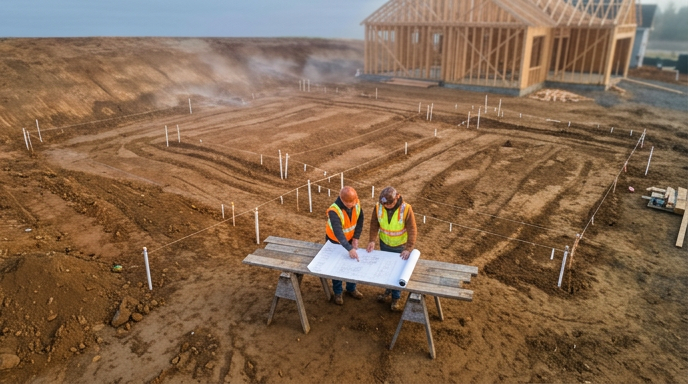
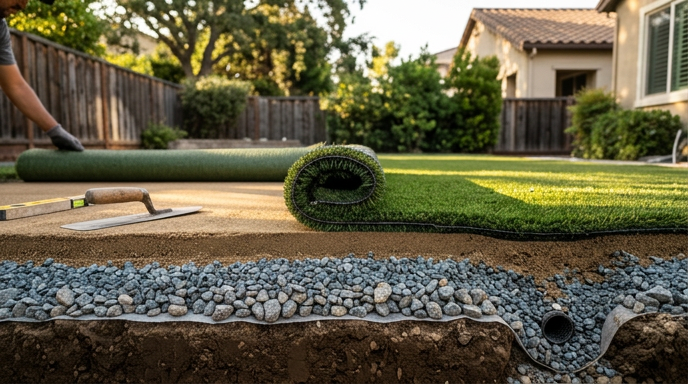
Sometimes the simplest thing to do on an unlevel property is just to make the ground a little more even. Small potholes, mounds, and other irregularities can often be smoothed over through applications of soil or mulch (or in some cases, removal of the same). In some cases, stones, gravel, and sand, as well as landscape fabric, can also be added to promote stability.
Build Raised Beds
Raised beds can also be a helpful tool for properties of all types. A raised bed is typically a built structure (often, essentially, a wooden box) which is filled with soil and into which you directly plant. Because it is built, raised beds can fairly conveniently sited on ground that is not perfectly even; it can also help to obscure irregularities on a lawn or elsewhere on a property.
Raised beds also provide other advantages. They can be great for vegetable gardening, frequently providing more sun and better drainage than in-ground beds. They can make for less weeding, and can effectively lengthen the growing season as well. And they're not just good for vegetables; flowers and other ornamental plants can do wonderfully in raised beds!
Create Terraces
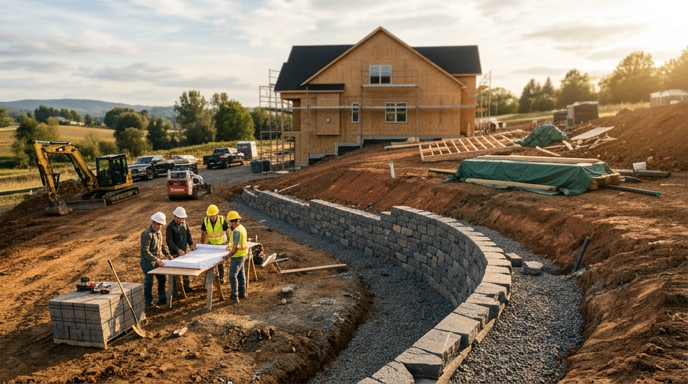
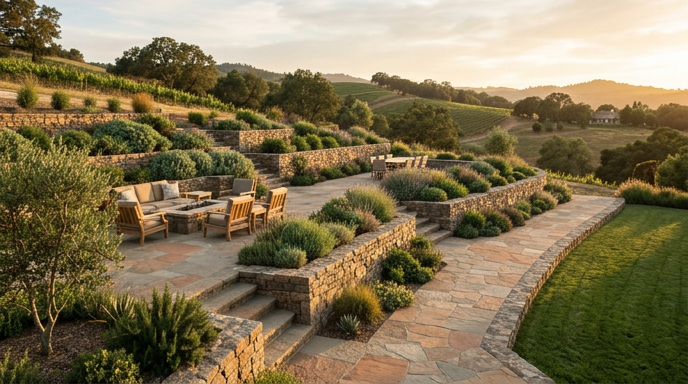
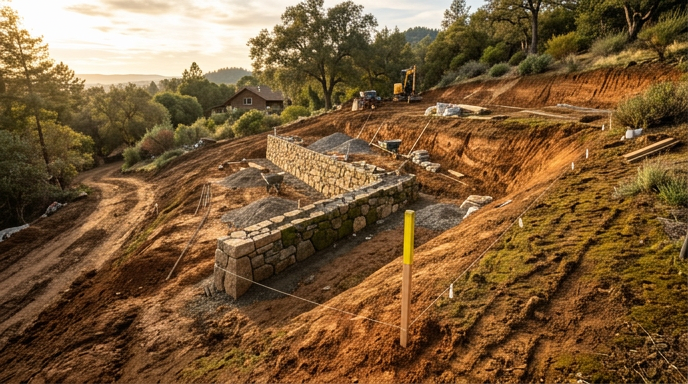
"Terraces" are a method of gardening designed for hilly landscapes. They essentially turn hilly parts of the landscape into "stairs," providing level surfaces for gardening. This can help maximize space in areas that might not otherwise be conducive to landscaping. They can also help prevent erosion on the soil. Finally, they can be very aesthetically attractive, seamlessly integrating into an attractive landscape design.
Add a Water Feature
Water features can be used on all sorts of terrain, including hilly or uneven ground. In fact, hills can sometimes help: you may be able to channel water down unlevel parts of the property, either draining it away from your property, or channeling it toward a pond. On that note, a pond or other manmade water feature can be a great way to either take advantage of uneven terrain, or (depending on the feature), simply cover it up.
Include Decorative Paths
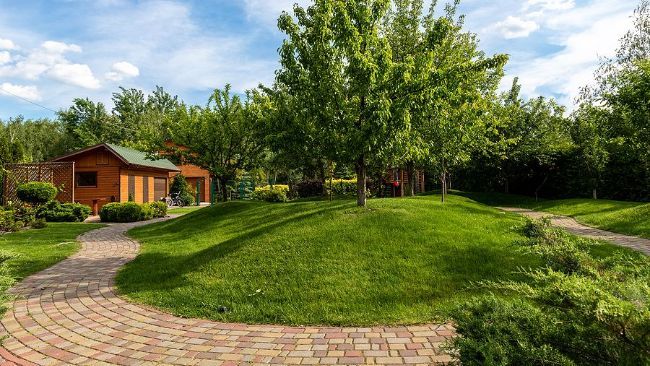
Adding decorative stone walkways, stairs, and similar features can also be a great way to make use of uneven ground. Stairs built into the side of a hill can help to take advantage of the unique contours of your property. Simiarly, large and small stones can be a way to fill in spaces in uneven ground, helping to level it out and giving it a clear purpose for your property as well.
Plant Trees and Shrubs
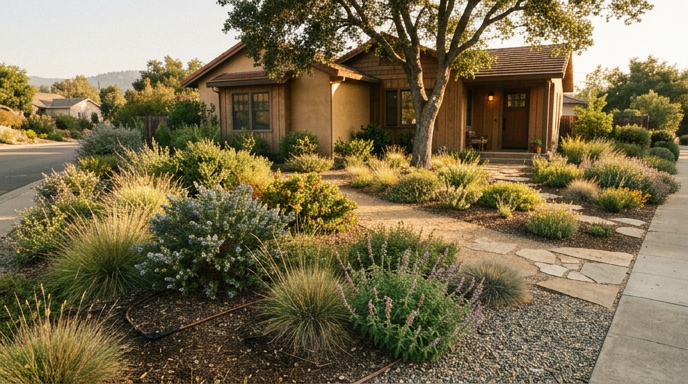
In some cases, simple trees and shrubs can also be planted right into uneven spaces. They can actually be pretty useful in such locations. Trees and shrubs that are well-rooted into hilly terrain can help to prevent erosion, keeping a steep or otherwise irregular landscape contained and together, especially as roots expand.
Just be careful on two counts. First, be sure to select trees and shrubs that are suitable to your climate and landscape. If you're unsure, you can check the USDA zone hardiness map. Second, be sure to plant trees and shrubs at the proper depth. If they are too deep or too heavily mulched, they might suffocate. At the same time, if they are too shallow, their roots might become exposed and they may not survive.
Contact a Professional Landscaping Contractor
Sometimes it's hard to figure out the best plan of action for a given property — especially if you are new to landscaping or gardening. At such times, it's a good idea to call a professional.
Canepa Landscaping has extensive experience with
landscape design and can help you dramatically spruce up your property. For more information or to request a quote, visit
Canepa Landscaping online or call (707) 322-7007.
Share on Social
Other Posts You Might Enjoy