What to Know Before Adding an Outdoor Kitchen to Your Backyard
Outdoor Kitchen Planning: What Sonoma Homeowners Need
Adding an outdoor kitchen to your Sonoma County backyard is one of the highest-impact investments you can make in your outdoor living space — but the project involves structural decisions, utility work, and permits that require careful planning before a single appliance goes in. Understanding what's involved early helps you avoid costly missteps and build a space that performs reliably for years.
Key Takeaways
- Outdoor kitchen design should be based on how you cook, entertain, and use your backyard.
- Using durable outdoor materials is important because the kitchen will be exposed to weather year-round.
- Outdoor kitchens often need permits for gas, electrical, plumbing, or covered structures.
- The outdoor kitchen layout should account for drainage, shade, and access to the home.
An outdoor kitchen can turn your backyard into a place where cooking, hosting, and everyday meals happen outside. The mild Sonoma County climate makes outdoor cooking and entertaining practical for most of the year. But before you pick out a grill or start sketching a layout, it helps to understand what this kind of project actually involves. The planning decisions you make early on will shape how well your outdoor living space works for years to come.
What Should Your Outdoor Kitchen Include?
Not every outdoor kitchen construction project looks the same, and it shouldn't. The right layout depends on how you cook, how many people you typically entertain, and how much space you have to work with. That said, most functional outdoor kitchens are built around a few core components.
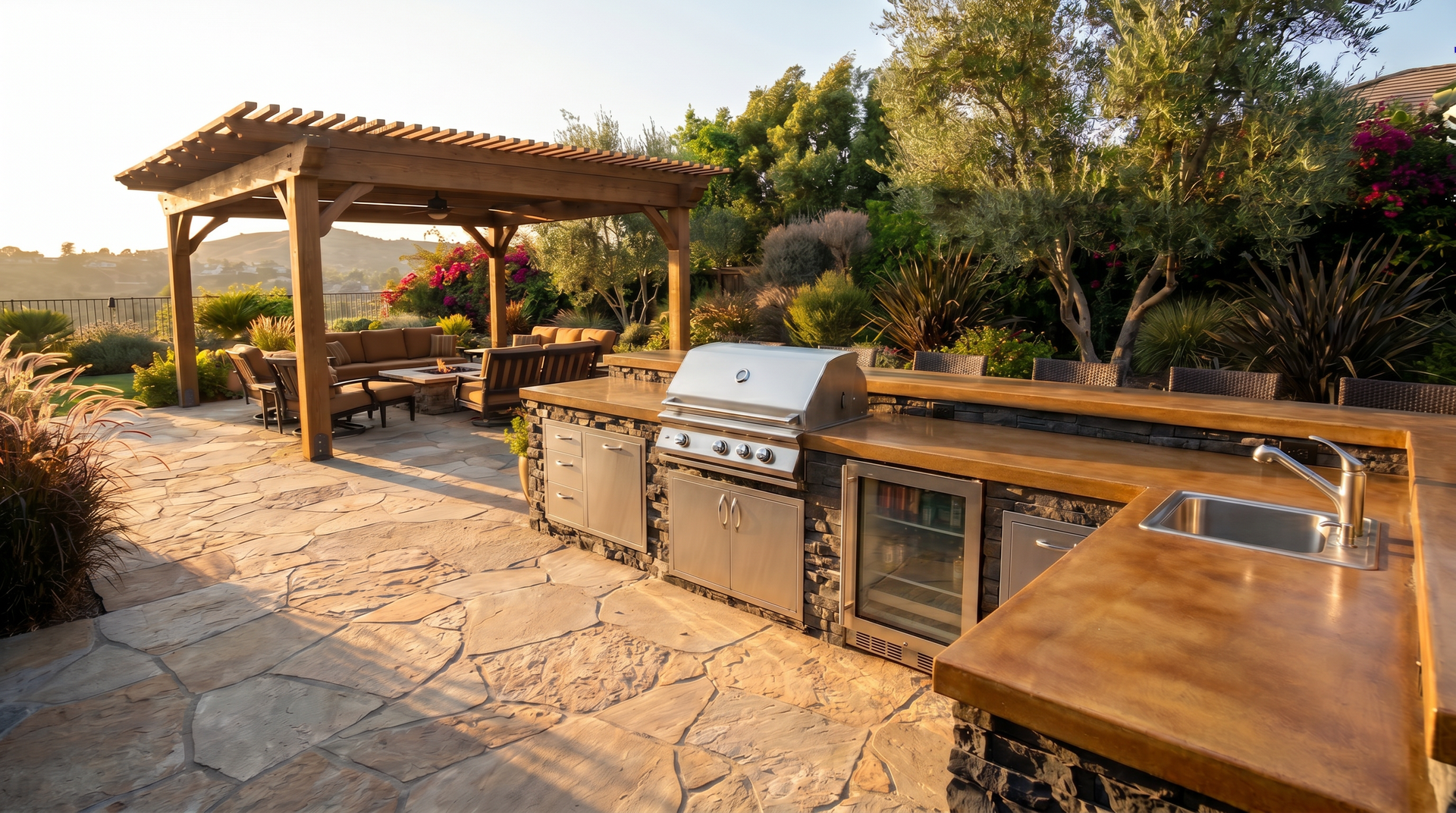
The grill is typically the centerpiece. From there, homeowners add prep counter space, a sink for cleaning up without running back inside, and a small refrigerator for keeping drinks and ingredients close at hand.
Some outdoor kitchens include side burners, a pizza oven, or a built-in fire feature that extends the space into an evening gathering area. A good landscape construction team will help you figure out what belongs in your layout and what can wait, so you’re not overbuilding on day one or wishing you had planned for more from the start.
What Materials Work Best for an Outdoor Kitchen?
Your material choices matter more outdoors than they do in an indoor kitchen. Everything you select will face sun, rain, heat, and cold over many years.
For the island structure itself, concrete block and steel-framed construction are the most durable options. They hold up over time and give the kitchen a solid, built-in feel. Avoid wood framing inside an island. Even pressure-treated lumber can warp, rot, or become a fire hazard near cooking surfaces.
Porcelain, granite, and concrete countertops perform well outdoors. Natural stone like marble looks beautiful, but it stains and etches easily in an outdoor setting and requires constant maintenance. Stainless steel appliances are the standard for outdoor use because they resist rust and hold up under weather conditions that would damage standard indoor appliances quickly.
What Utilities and Permits Does an Outdoor Kitchen Require?
Depending on what you include, your outdoor kitchen may involve gas lines, electrical circuits, and plumbing, all of which require permits in California.
Gas lines must be installed by a licensed contractor and inspected before use. California law doesn’t allow homeowners to run gas lines themselves, and for good reason. A poorly installed gas line is a serious fire and safety hazard.
Electrical work, including outlets, lighting, and dedicated circuits for appliances like a refrigerator, also requires a permit and inspection. If you add a sink with a drain connection, plumbing permits apply as well.
If the kitchen sits under an attached pergola or patio cover, that structure may require a building permit on top of the trade permits for utilities.
Permit timelines vary by city in Sonoma County, but the permitting process can take several weeks. Planning ahead is important because the work cannot legally begin until permits are approved. A landscape contractor with experience constructing outdoor spaces can coordinate the right trades, submit permit documents, and make sure each part of the project meets local code before construction moves forward.
How Does an Outdoor Kitchen Connect to Your Existing Space?
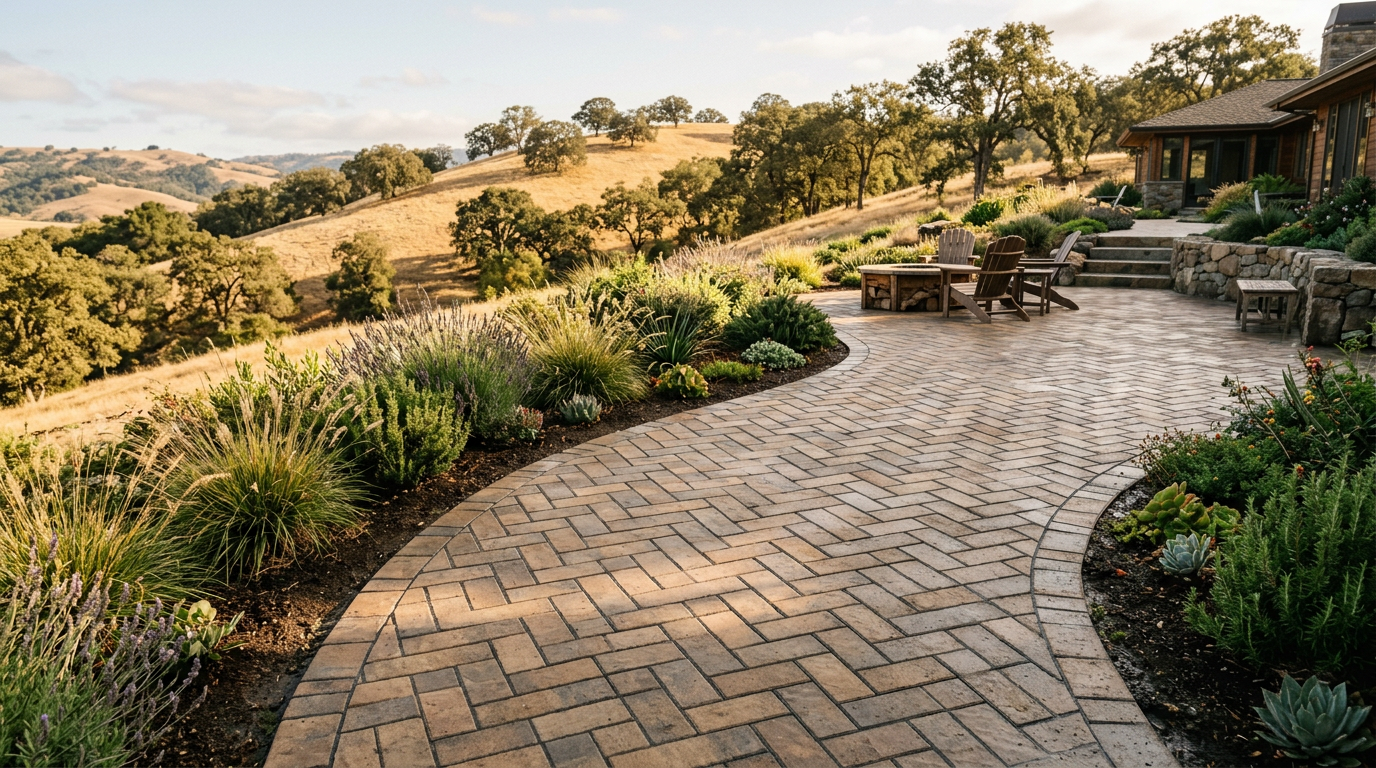
One of the most important questions to answer early is how the kitchen will fit with the patio, hardscape, and outdoor living space you already have. If you have an existing patio, the new kitchen needs to work with the existing grade, drainage, and hardscape layout.
Drainage is one of the biggest reasons this planning step matters. Water collecting around an island or under a countertop can cause damage over time and create slick, unsafe cooking areas.
A well-planned outdoor kitchen also connects logically to the home, with good flow between the indoor kitchen and the outdoor space. Sun exposure matters too. A cooking zone that faces directly into the afternoon sun can make the space uncomfortable during the exact hours you want to use it. These are the kinds of site-specific details a landscape design-build team evaluates during the planning phase.
Why Is an Outdoor Kitchen Not a DIY Project?
You may be tempted to put in an outdoor kitchen on your own, especially if you’re comfortable with backyard projects. However, unpermitted or improperly documented work can impact you long after the project is finished.
If you sell your home later, buyers, inspectors, or lenders may ask for proof that gas, electrical, plumbing, or structural work was permitted and completed correctly. Unpermitted work can delay a sale, force you to make corrections, or create questions about the safety of the home.
Installing the outdoor kitchen on your own may also cause problems with homeowner’s insurance if damage occurs and the work wasn’t completed to code. Working with a licensed landscape design-build team helps you avoid those issues by making sure the right permits, trades, and inspections are handled from the start.
Plan Your Sonoma County Outdoor Kitchen With Canepa Landscaping
Canepa Landscaping is a licensed Santa Rosa landscape contractor serving homeowners throughout Sonoma County. We handle the full scope of outdoor kitchen projects, from initial layout and design through permitting, utility coordination, and construction.
We also offer flexible financing options for qualified homeowners, with convenient monthly payments and clear terms. That means you can start building the outdoor kitchen you want while keeping your budget and future projects in mind.
Request a quote today, and let’s start planning an outdoor kitchen that feels built for the way you actually want to live outside.
Share on Social
Other Posts You Might Enjoy