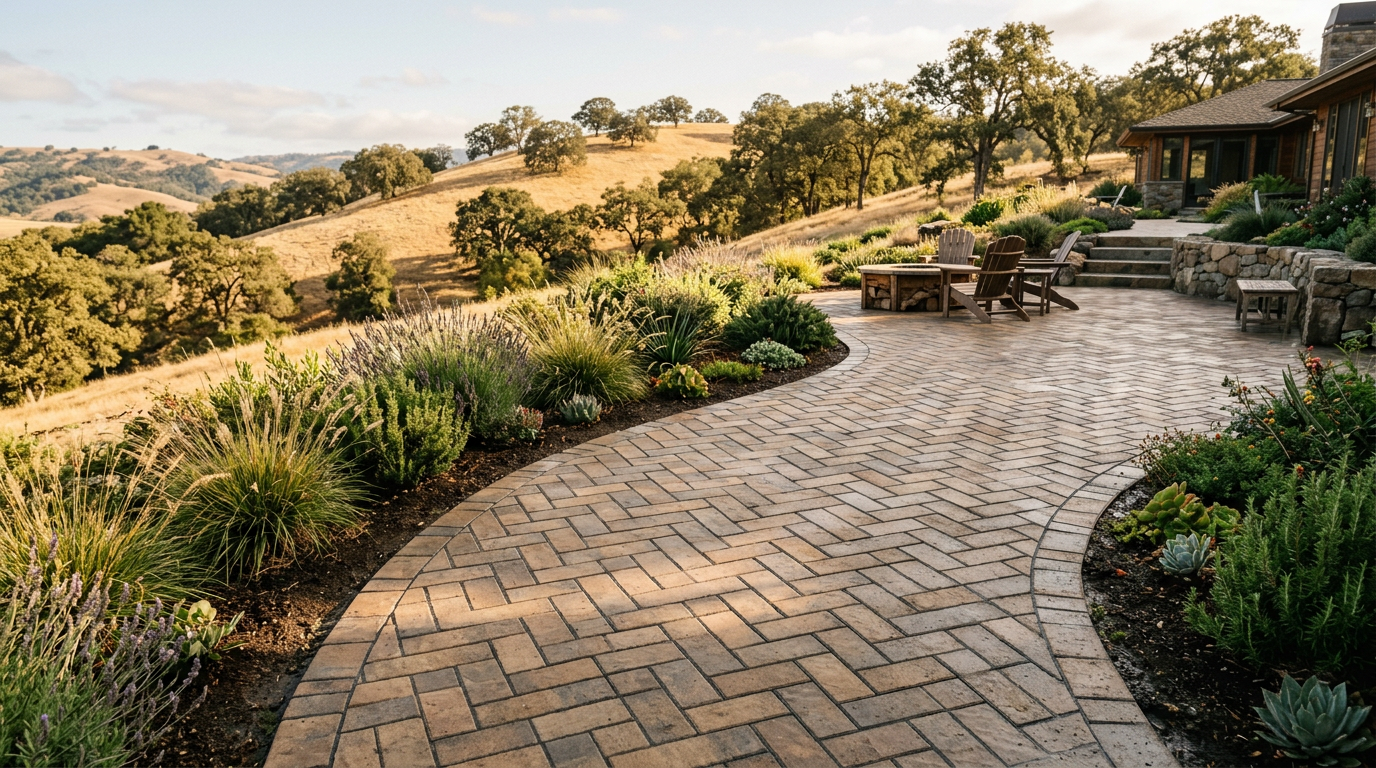
Retaining Walls and Grading: Preparing Sloped Yards for Spring Projects
Retaining Walls and Grading for Sloped Sonoma Yards
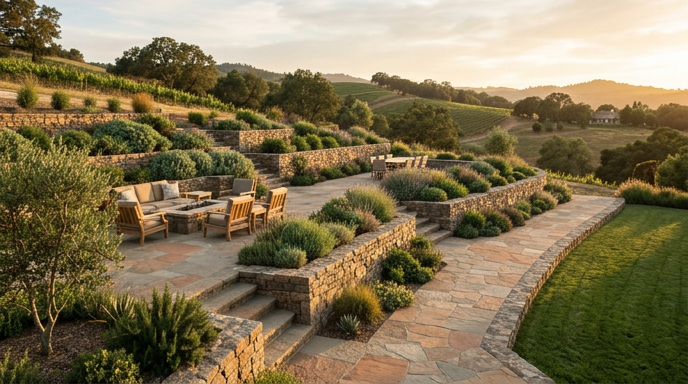
Professional retaining wall construction, supported by thoughtful landscape drainage planning, provides durable solutions for your sloped yard that protect and transform Sonoma County properties.
Key Takeaways
- Retaining wall construction stabilizes soil, prevents erosion, and creates safe, level spaces for patios, gardens, and other outdoor features.
- Smart landscape drainage planning reduces hydrostatic pressure, protects structural integrity, and improves the long-term performance of your retaining wall.
- Customized sloped yard solutions address Sonoma County’s hills and winter rains while expanding usable outdoor living space.
Sonoma County is known for its rolling hills and varied terrain. While that natural beauty adds character to your property, it also creates challenges when you’re planning a spring landscape project. Sloped yards can shift, erode, and collect runoff, especially after heavy winter rains.
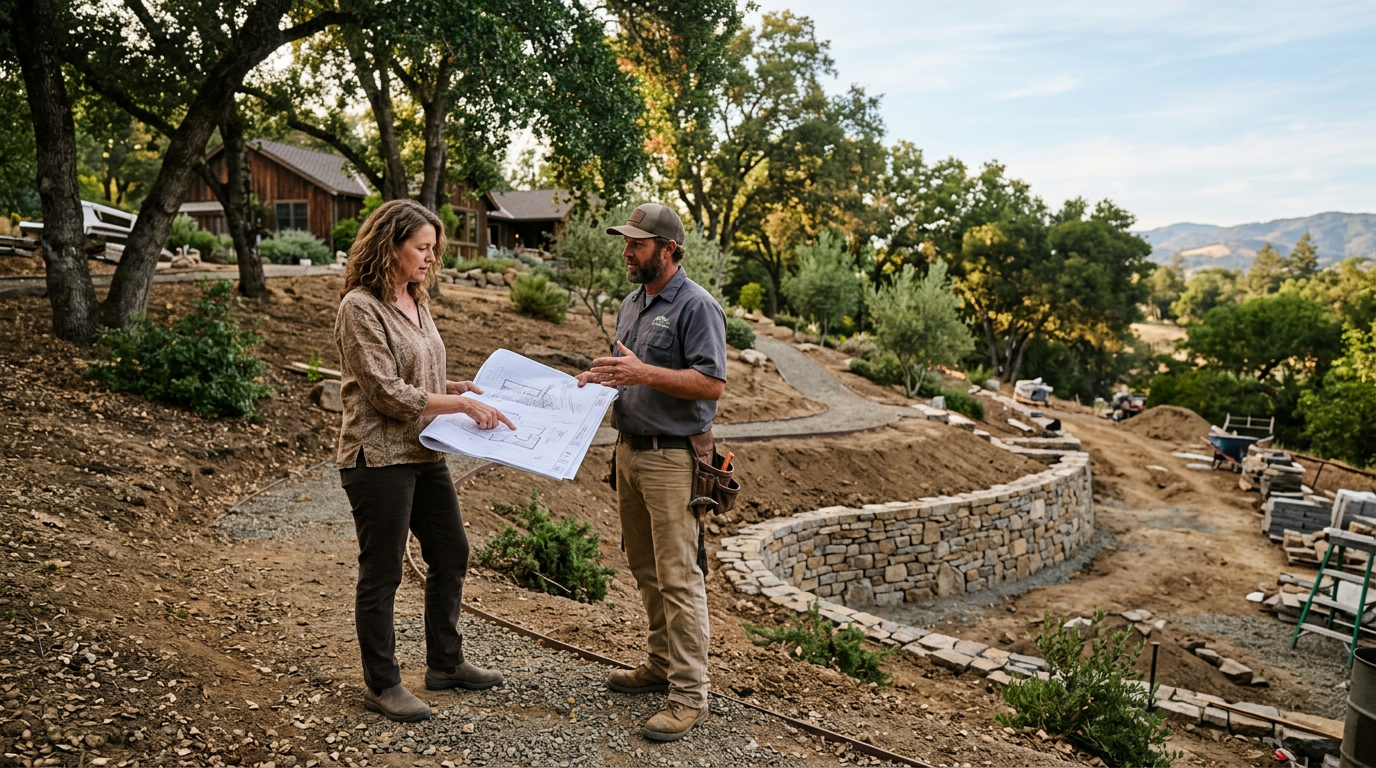
If you want to install a patio, lawn, garden beds, or an outdoor kitchen, you first need to address the slope itself. That’s where professional retaining wall construction and proper grading come in. These aren’t decorative extras. They’re structural systems that support everything else you plan to build. Ignoring them early often leads to higher repair costs later and limits your long-term sloped yard solutions.
How Does Retaining Wall Construction Stabilize Sloped Yards?
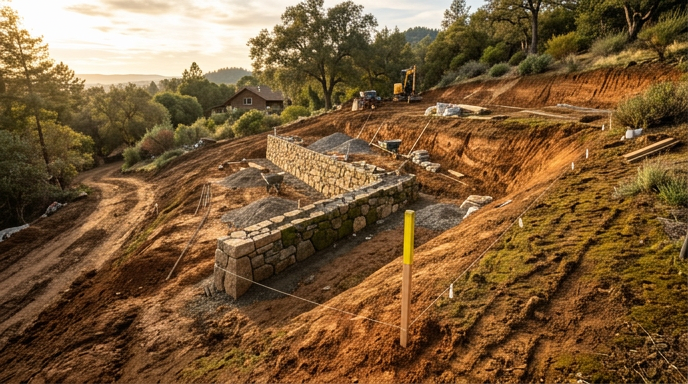
At its core, retaining wall construction is designed to hold back soil where the ground changes elevation. Without a properly built wall, gravity slowly pulls soil downhill. When winter rains soak the ground, that movement speeds up and becomes more noticeable over time.
Erosion can expose roots, undermine patios, and put pressure on foundations. A well-built retaining wall resists the lateral force of soil and keeps the landscape in place. It also creates level, usable areas where you can safely install hardscape and plantings. That’s why strong engineering is at the heart of effective sloped yard solutions.
In Sonoma County, where both sloped properties and seasonal rains are common, professional retaining wall installation plays a critical role in maintaining long-term landscape stability.
Why Is Grading Essential to Successful Retaining Wall Construction?
Grading is one of the most important steps when building a retaining wall. Before a wall is installed, the land must be shaped correctly to control water flow and create a stable base.
Without proper grading, water may collect behind the wall or near your home. That added moisture increases pressure and can lead to cracking or shifting over time. Strategic grading supports smart landscape construction, which directs runoff away from structures and reduces erosion before it becomes a larger problem.
In areas with clay-heavy soils, which are common throughout Sonoma County, moisture causes the ground to expand when wet and shrink when dry. Careful grading and soil compaction help manage this natural movement.
How Does Landscape Drainage Planning Strengthen Retaining Wall Construction?
Drainage is not optional when installing a retaining wall. It’s essential. Water is the biggest threat to long-term performance. When soil becomes saturated, it grows heavier and increases hydrostatic pressure, which pushes against the back of the wall.
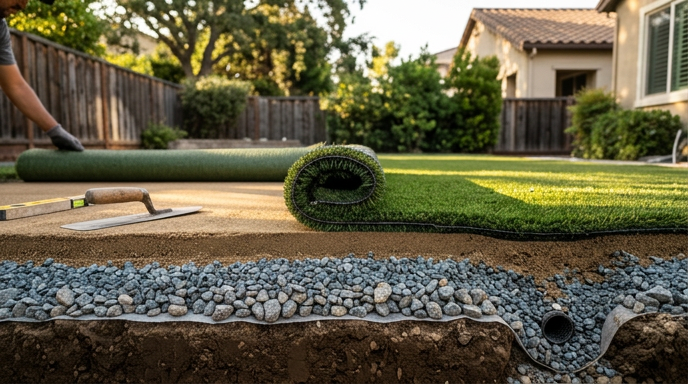
Professional landscape drainage planning goes beyond basic backfill. It often includes layered gravel, perforated drain pipes, and strategically installed French drains that redirect water away from the wall and surrounding structures. These components allow water to move through and away from the structure instead of building up behind it. By relieving pressure, proper drainage significantly reduces the risk of structural failure.
In a region with rainy winters like Sonoma, combining expert drainage design with quality retaining wall installation ensures your yard performs reliably year after year.
What Engineering and Material Decisions Impact Retaining Wall Construction?
Successful retaining wall projects require careful engineering. Wall height, soil conditions, and slope angle all influence the design. In many cases, walls over three to four feet require engineered plans and permits to meet local building codes.
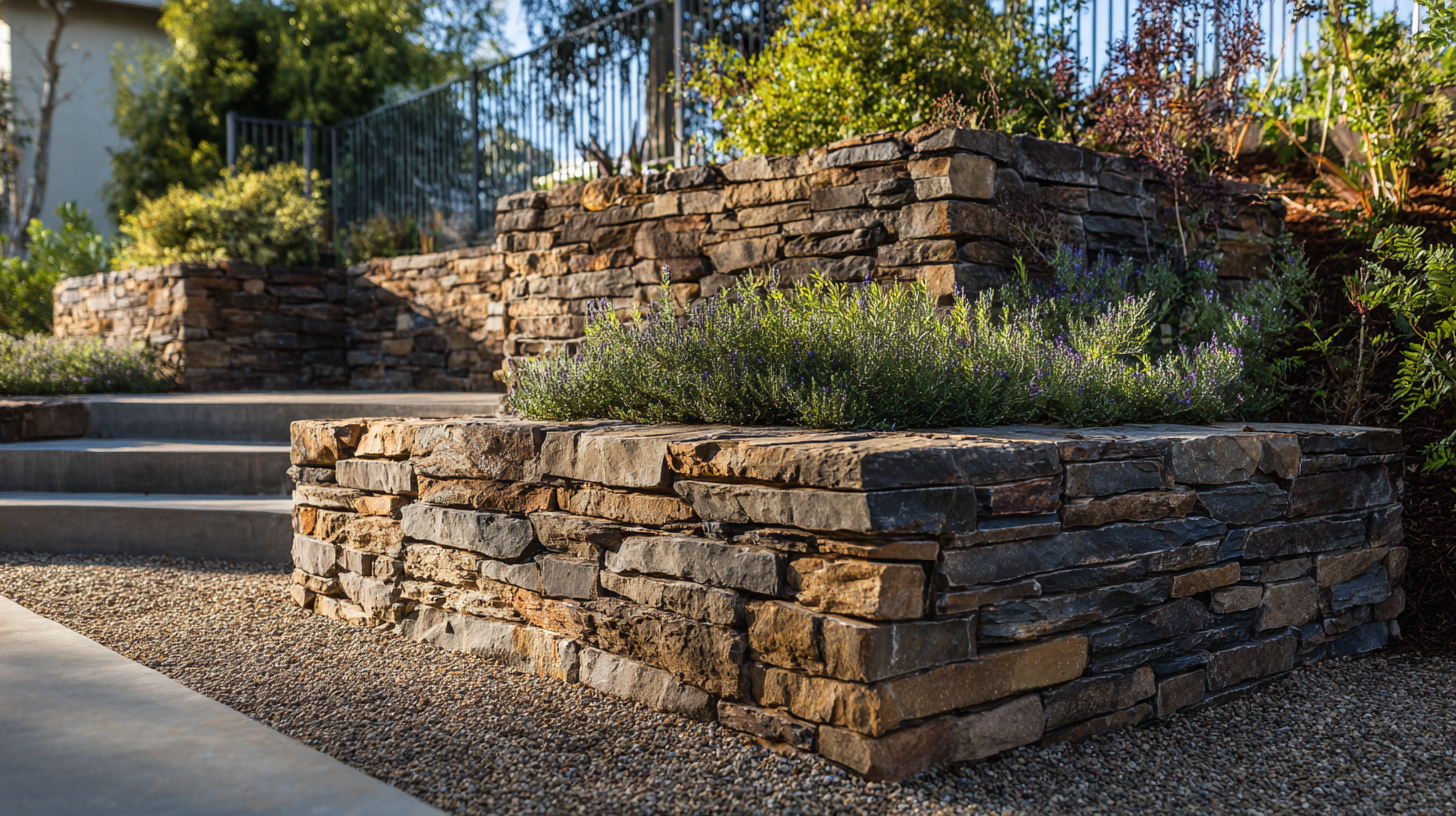
Material selection also affects the durability and appearance of your wall. Concrete block systems offer strength and versatility. Natural stone provides lasting performance while blending beautifully with Sonoma’s landscape. Timber can create a rustic look but may have a shorter lifespan in wet conditions.
Project costs vary based on wall height, total length, site accessibility, drainage systems, and any required engineering. If you’re planning a backyard renovation, investing in professional retaining wall installation may feel like a big step upfront, but it provides long-term stability that protects your property and opens up more functional outdoor space for years to come.
Retaining Wall Construction Is the Foundation of Reliable Sloped Yard Solutions
Canepa Landscaping works with homeowners throughout Sonoma County to plan and build retaining wall systems that are engineered for stability and designed to complement the surrounding landscape. From the initial site evaluation to final installation, our team focuses on durable materials, proper drainage integration, and solutions tailored to your property’s unique grade and soil conditions.
Contact Canepa Landscaping to find an experienced landscape contractor who can help you make the right structural decisions and build a retaining wall designed for long-term performance.
Share on Social
Other Posts You Might Enjoy