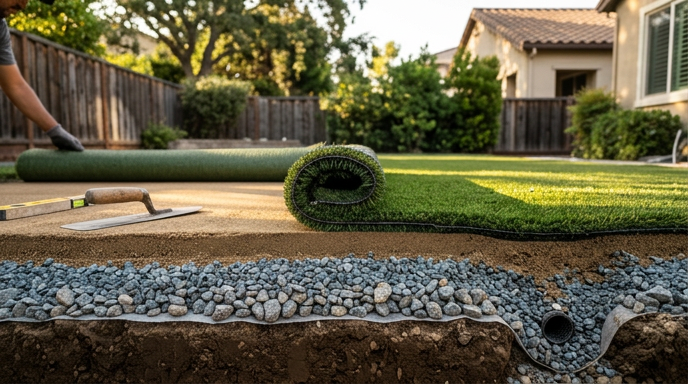
How to Check Your Backyard Drainage Before the Rainy Season in Sonoma County
Backyard Drainage Check: What to Inspect Before Rainy Season
Most drainage problems show up in the first storms, but you can find them earlier by watching where water enters your yard, where it collects, and where it leaves. This guide walks you through a safe inspection of downspouts, the soil line at the foundation, low spots, and the base of any slope. It then matches each symptom to the right fix and explains when the job needs a licensed design-build contractor.
Key Takeaways
- Start at each downspout outlet. A pipe that still discharges beside the foundation hasn't solved anything.
- Soil should slope away from the house. A board and level can reveal an obvious reverse slope, but they don't replace an elevation assessment.
- Match the fix to the water path: regrading, catch basin, French drain, or dry well. Every option needs a suitable outlet.
- Photograph puddles and sketch runoff direction. Comparing after the next rain separates a recurring problem from one unusual storm.
- Repeated pooling near a foundation or slope calls for a professional assessment.
Backyard drainage problems are easier to assess when you know where to look. Check the places that collect or direct runoff before Sonoma County's rainy season settles in.
Checking backyard drainage before Sonoma County's rainy season starts with understanding how water moves across your property. A puddle beside the patio may be easy to spot, while runoff toward the house can go unnoticed until a heavier storm. A careful walk during light rain, or shortly afterward, helps you identify the locations a contractor should assess before you choose a fix.
Where Should You Look for Backyard Drainage Problems?
Begin a backyard drainage check where each downspout empties. An outlet that sends roof water across a path may explain a puddle farther downhill. Follow that route from safe ground, and look for disconnected joints or an outlet buried beneath mulch. Extending the pipe a few feet won't help if it still discharges beside the foundation.
Along the house, check whether soil has built up against the siding or covered drainage openings. Water needs a route away from the foundation. A muddy strip or raised soil line can point to an area that needs a closer look.
Walk toward the yard's low spots and the base of any slope. Look for sediment trails, small channels, and leaves caught against a fence. These clues help explain which way runoff traveled after the rain stopped.
Stay off steep or slippery ground, and don't enter flooded areas to inspect them. Take photos from a safe spot so a contractor can assess drainage around your property. Note whether the water comes from your roof or flows in from uphill.
How Can You Tell Whether the Yard Slopes Away From the House?
Grading means shaping the ground to manage its slope and water flow. A yard can appear level while containing shallow dips that send runoff toward a building. Look at the whole route, including where paths or patios interrupt it.
Soil around the house should slope away from the foundation. One published benchmark for permeable surfaces is at least half an inch of fall per foot over 10 feet, for a total drop of 5 inches. This is a reference point, not a complete drainage design. Have a contractor check elevations and local rules before changing the ground.
A straight board and level can help you notice an obvious reverse slope on accessible ground. They don't replace an elevation assessment, especially where water crosses several surfaces before reaching an outlet.
Don't pile soil against the house to create a slope. That can reduce needed clearance at the building. Where fences or nearby slopes limit space, a contractor may need to combine grading with drains rather than rely on one continuous soil slope.
Which Drainage Fix Matches the Problem You Find?
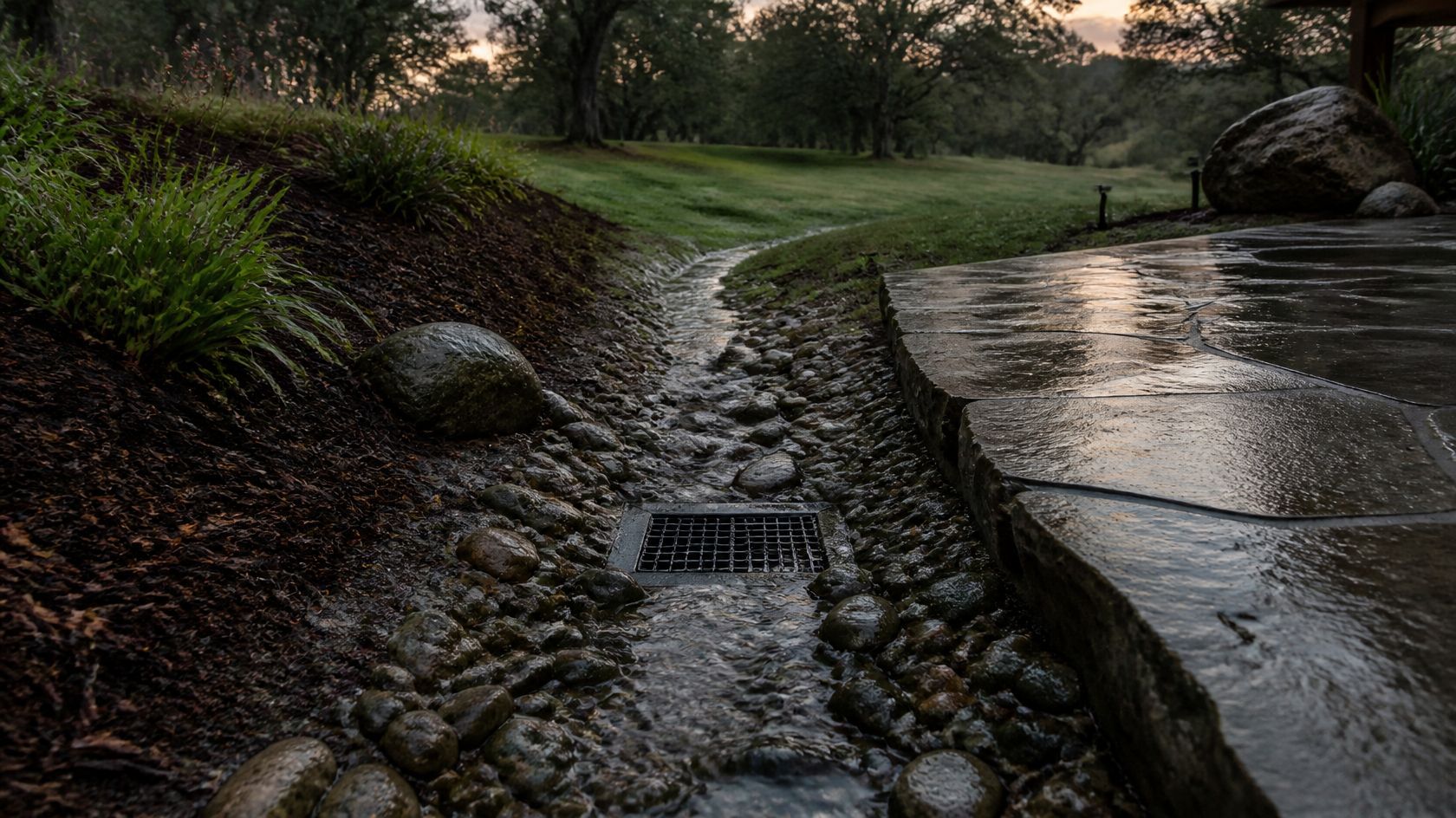
Match a drainage repair to the path the water takes. Water flowing across a patio needs collection at the surface; wet soil may call for a different approach. In either case, the system needs a suitable discharge point. Otherwise, a new pipe may only move the problem underground or toward a neighbor.
Regrading changes the ground's slope and may correct a shallow low spot that sends runoff toward the house. If water pools on a patio or another hard surface, a catch basin may suit the problem. This grated collection box carries surface water into solid pipe, which needs an appropriate outlet.
A French drain installation uses a gravel-filled trench and perforated pipe to collect water moving through the ground. It isn't automatically the best answer for fast roof runoff or every patio puddle. Some projects need both surface collection and subsurface drainage.
A dry well stores runoff and lets it soak into nearby soil. It may suit a site with enough space and soil that drains well, but it can perform poorly in saturated ground. Daylighting means bringing a drain pipe to an open outlet. The outlet needs protection against erosion and must discharge where the water can safely go.
What Yard Drainage Maintenance Can You Do Before a Storm?
Clear loose leaves from accessible drain grates and downspout outlets. Check that an existing outlet hasn't disappeared under soil or plant growth. For seasonal French drain maintenance, focus on visible access points and surface debris rather than digging into the system.
Use a simple inspection record:
- Photograph each puddle and note when the rain stopped.
- Mark the direction of surface runoff on a yard sketch.
- Note blocked outlets and changes near the house.
After the next rain, compare the same locations with your photos. Note whether water reached a larger area and how long it remained after rainfall stopped. Those observations help distinguish a recurring problem from one unusual storm, though soil conditions affect how quickly a yard dries.
If a drain stays backed up after surface cleaning, a larger pipe may not solve it. A damaged line or poor slope could be the cause. Effective subsurface drain placement also depends on where water collects below ground and whether the outlet can carry it away.
Get a Drainage Plan for Your Sonoma County Yard
When water keeps collecting near your foundation or washing onto a slope, our Canepa Landscaping team can assess how the grading and drains work together. Bring your rain photos and yard sketch to the review. As a licensed design-build contractor, we can help define work that goes beyond clearing a grate and identify needed design or permit steps.
For a free consultation about your yard's drainage, call (707) 322-7007 or discuss landscape construction with Canepa Landscaping.
Share on Social
Other Posts You Might Enjoy