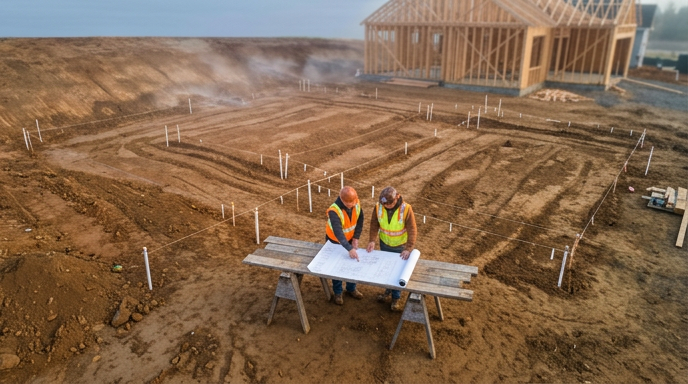
How to Stop Erosion on a Sloped Backyard Before Winter Storms
How to Stop Slope Erosion Before Winter Storms in Sonoma County
Soil washing down a slope needs attention before the next storm, but the right response depends on whether rain is stripping the surface or the hillside itself is moving. Temporary cover and cleared drainage paths can reduce surface damage now. Lasting repairs such as terraces, swales, French drains, and retaining walls have to match the cause, and some slopes need engineering and permits.
Key Takeaways
- Check where runoff reaches the top of the slope. Divert it only to an existing, suitable outlet.
- Cover bare soil with anchored jute netting or erosion-control blanket. Loose mulch can wash away.
- A new channel forming beside the covered area means runoff is bypassing the protection and the water route needs review.
- New cracks, bulging soil, a leaning tree, or a shifting wall point to movement below the surface and need professional evaluation.
- Retaining walls need drainage behind them. Repairing only the visible face can leave the cause in place.
Soil washing down a backyard slope deserves attention before the next storm. Understand which measures can help now and when the hillside needs a lasting repair.
Erosion on a sloped backyard can leave exposed roots, muddy paths, and soil deposits after each winter storm. In Sonoma County and the North Bay, the first step is to see whether rain is stripping the surface or the slope itself is moving. Temporary protection can help with surface erosion, but continuing movement calls for a different kind of assessment and repair.
What Can You Do Now to Limit Slope Erosion?
Before the next storm, focus on the water reaching your slope and any exposed soil. Temporary measures can reduce surface damage while you plan lasting work. They won't hold an unstable hillside in place.
Where Is Runoff Reaching the Slope?
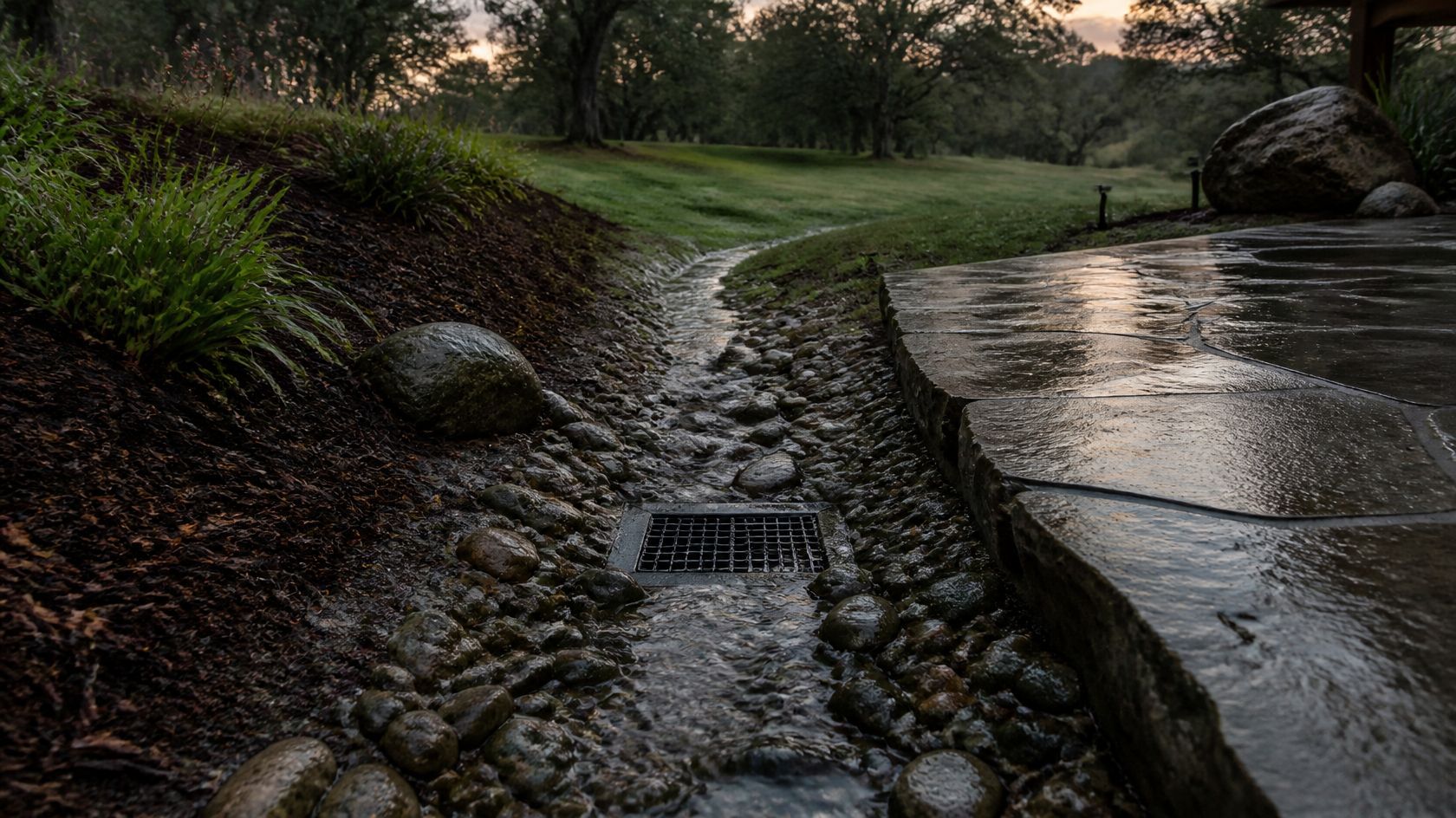
Runoff entering at the top of a slope can cut channels through the soil below. From safe ground, check whether a downspout or uphill paved area feeds that flow. Divert it only where an existing, suitable drainage route can receive it. If you can't identify a safe outlet, have the drainage assessed before changing the water's path.
Clear leaves and loose debris from accessible existing drainage paths. Don't dig a new channel across a hillside or send runoff onto a neighbor's land. Keep clear of steep ground during rain.
How Can You Protect Bare Soil on a Slope?
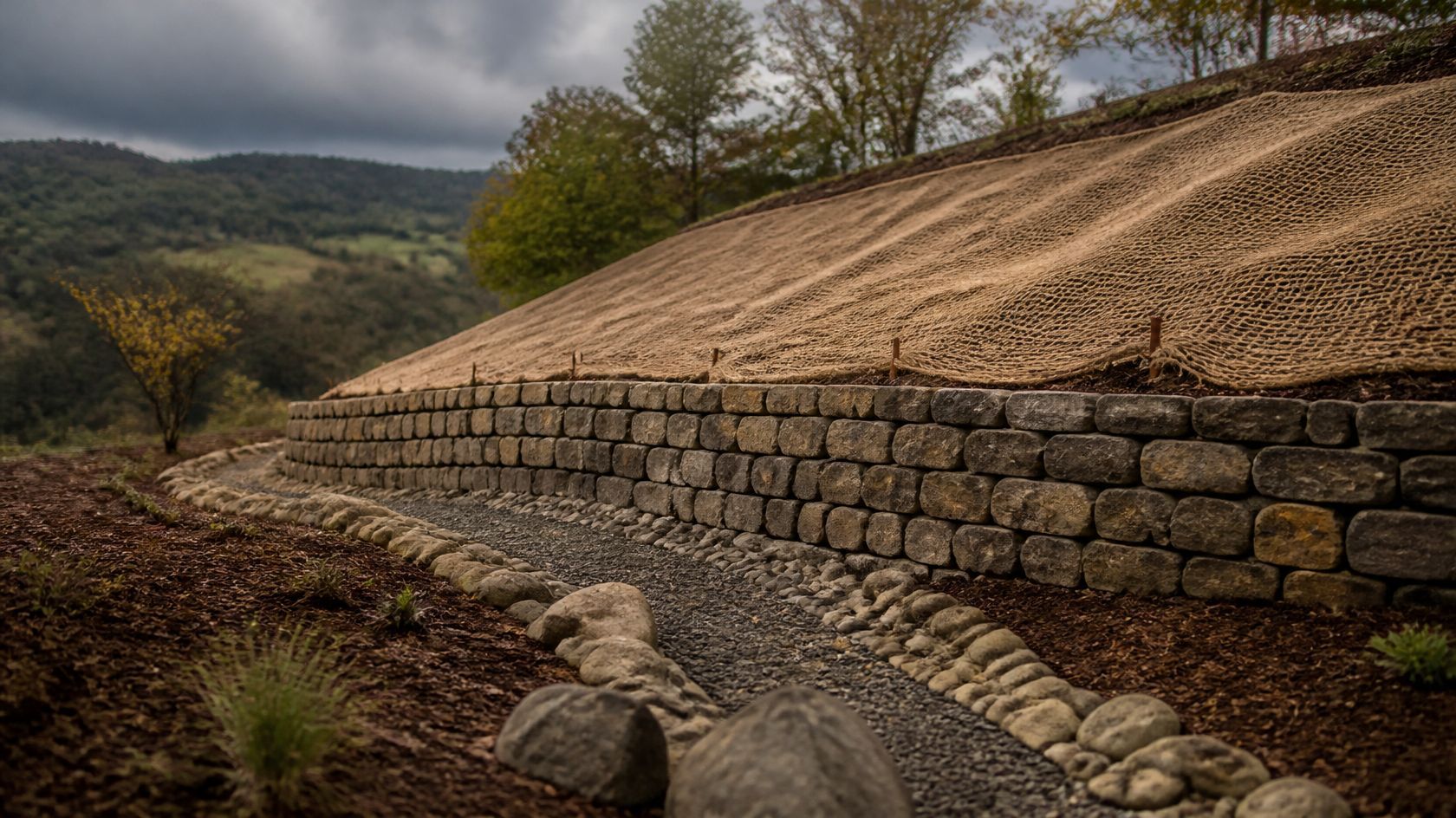
Cover exposed soil with a material suited to the slope. Surface cover can reduce erosion by softening the impact of rain and slowing runoff. Coarse mulch may stay in place on gentler ground. Properly anchored jute netting or an erosion-control blanket may help protect steeper exposed areas.
Material choice and installation matter. Loose mulch can wash away, and a blanket that doesn't stay in contact with the soil may offer limited protection. Near buildings, wildfire safety also affects what ground-cover material you should use.
When Does a Slope Need More Than Temporary Erosion Control?
To assess temporary erosion protection, photograph the slope from the same safe spot before and after rain. If the covered soil stays in place but a new channel forms beside it, runoff is bypassing the protection. More cover alone may not solve that problem; the route bringing water onto the slope needs review.
New cracks in the ground or bulging soil can point to movement below the surface. A tree that starts to lean or a retaining wall that shifts also needs prompt attention. Keep people away from the affected area and get professional advice. Call emergency services if the movement creates an immediate danger.
Which Permanent Repairs Can Help Control Slope Erosion?
Permanent erosion repairs need to match the cause of soil loss. For example, netting over a bare patch won't correct a downspout that keeps pouring water onto it. Planning grading for sloped yards starts with how water reaches the hillside and where it can leave safely.
What Do Terraces, Drains, and Retaining Walls Solve?
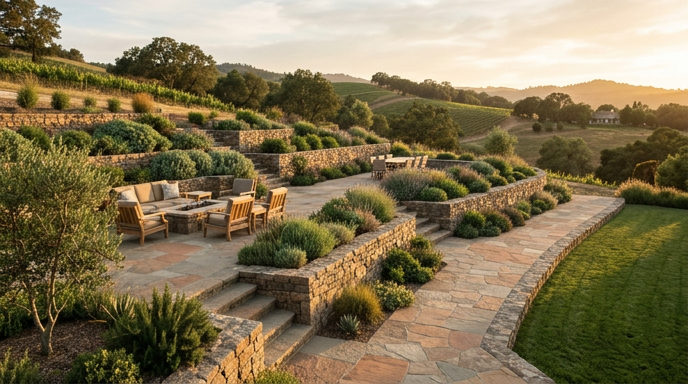
Terracing divides a long slope into shorter, flatter sections. It can make the yard more usable and slow runoff, but the design must account for drainage and the soil each terrace holds. Cutting steps into a hillside without a plan can make conditions worse.
A swale is a shallow shaped channel that directs surface water. It needs a controlled route and outlet. A French drain collects water below the surface; it doesn't replace a swale simply because both carry water. The design should match the source and location of the moisture.
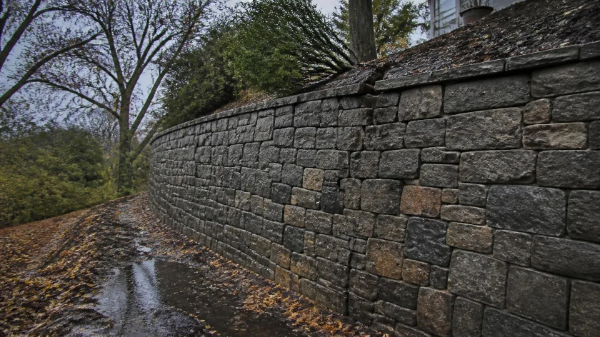
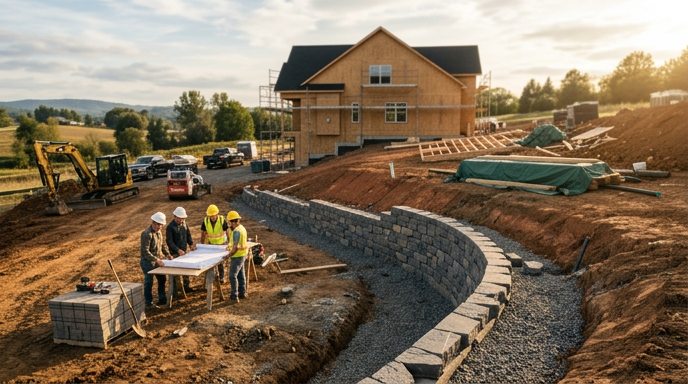
Retaining walls hold back soil and create changes in elevation. Effective retaining wall design includes a way for water to drain. Trapped water adds pressure behind a wall, so repairing the visible face alone may leave the cause of movement in place.
A contractor may combine these measures rather than select just one. Improving property drainage means managing where water enters and leaves the project area. A fix that protects one patch while eroding the slope below it is incomplete.
When Do Slope Repairs Need Engineering or Permits?
A licensed design-build contractor can assess the proposed work and identify when other professionals need to be involved. Geotechnical engineers evaluate soil and slope behavior. Civil or structural engineers may design drainage or retaining structures within their area of expertise.
Permits depend on the project's location and scope. Excavation, grading, and retaining wall construction can trigger review, and local rules differ between incorporated cities and unincorporated areas. Confirm landscape permit requirements with the agency responsible for your property before work begins.
Before approving a slope-repair proposal, ask the contractor to trace the planned water route with you. Find out which measure protects the surface and which supports the soil. The proposal should identify needed approvals and maintenance, so you can see whether it addresses erosion, deeper movement, or both.
Plan a Lasting Slope Repair With Canepa Landscaping
Our Canepa Landscaping team can review a slope that keeps losing soil and plan appropriate grading, drainage, or retaining wall work. If the ground itself is moving, the next step may include engineering rather than another layer of surface cover. We'll help identify what the site needs before construction, including permit coordination where required.
To discuss your property in a free consultation, call (707) 322-7007 or request a construction consultation with Canepa Landscaping.
Share on Social
Other Posts You Might Enjoy